

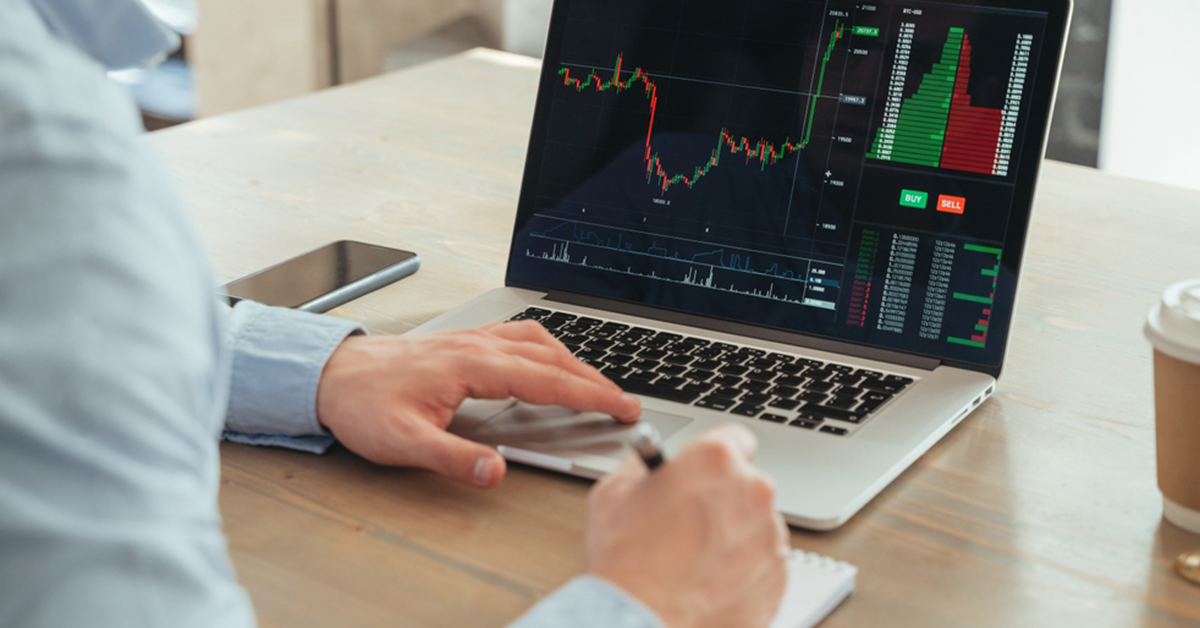
Setting up your trading screen can feel incredibly empowering, but watching your hard-earned money immediately dip into the negative the second you enter a trade is always a bit of a shock. This instant deficit isn’t a glitch; it is the fundamental cost of doing business represented by the bid-ask spread. Learning how to run these quick calculations in your head is the easiest way to prevent transaction costs from quietly eating away at your trading capital.
Why does my account start in the negative the second I open a trade?
Whenever you purchase or sell a currency pair, your broker presents you with two different prices: the bid and the ask. This setup is exactly like exchanging physical cash at an airport kiosk. The booth operator buys your currency at a lower rate but sells it back to you at a higher rate, pocketing the difference as their service fee.
In the digital markets, the bid is what you sell at, and the ask is what you buy at. Because the buying price is always slightly higher than the selling price, your trade starts with a tiny immediate loss. You must wait for the market to move far enough in your direction to cover this gap before you can begin securing any profit.
How do I read the decimals on my screen to find the spread?
Most major currency pairs are quoted to five decimal places, while Japanese Yen pairs are quoted to three decimal places. The fourth decimal place (or second for Yen) is called a pip, which stands for “percentage in point.” The tiny final digit after the pip is a pipette, representing a tenth of a pip.
Do not let all those trailing numbers confuse you. To identify the spread, you only need to focus on those last few decimal positions. For example, if the EUR/USD bid is 1.08521 and the ask is 1.08533, the difference lies in the very end of the numbers. Stripping away the first few digits makes it much easier to see the gap without feeling overwhelmed by math.
What is the actual formula to find the spread in real-time?
The math here is incredibly simple, requiring nothing more than basic subtraction. To master how to calculate spread in forex on the fly, you subtract the bid price from the ask price.
$$\text{Spread} = \text{Ask Price} – \text{Bid Price}$$
Let us look at a quick real-world example using the GBP/USD pair. If your platform shows an ask of 1.27425 and a bid of 1.27410, you calculate the difference:
$$1.27425 – 1.27410 = 0.00015$$
Since we measure standard spreads in pips, this difference of $0.00015$ translates to exactly 1.5 pips. It is a quick, painless calculation that takes less than two seconds once your eyes get used to tracking the decimal places.
How do I convert that pip spread into actual cash value?
Knowing your spread in pips is great, but you ultimately need to know what that means for your account balance in real dollars. The cash value of a pip depends entirely on your position size, which is measured in lots.
For a standard lot ($100,000 worth of currency), one pip is generally worth $10. If you are trading a mini lot ($10,000), a pip is worth $1, and a micro lot ($1,000) brings it down to $0.10. Taking our earlier 1.5-pip spread, trading a standard lot means your transaction cost is $15. If you downsize to a micro lot, that same spread costs you a mere fifteen cents. Always calculate this cash value before entering a trade to ensure the cost fits your risk plan.
Why does the spread on my screen keep shifting throughout the day?
Unless you are trading on a fixed-spread account, you will notice the gap between the bid and ask constantly expanding and contracting. This fluctuation is driven by liquidity, which is simply the volume of active buyers and sellers in the market at any given moment.
During high-volume periods, like when the London and New York sessions overlap, competition is fierce, and spreads shrink to their narrowest levels. However, when major economic news is about to drop, liquidity providers temporarily pull back their orders. This defensive move causes spreads to balloon instantly. Trying to execute trades during these volatile spikes is like trying to buy umbrellas during a sudden downpour—you are going to pay a heavy premium.
How do I keep my transaction costs as low as possible?
The most effective way to protect your trading edge is to be highly selective about when you trade and who you trade with. Stick to the highly liquid major currency pairs, as they inherently feature the tightest spreads in the global market.
Additionally, you want to partner with highly competitive, low spread forex brokers that offer transparent, raw pricing models. Make it a rule to check your terminal’s spread indicator before clicking the execute button, especially if you are trading near market opens or closes. By managing these small transactional frictions with strict discipline, you keep more of your hard-earned winnings inside your own account.
Summary
Calculating your trading spreads in real-time is not about complex algebra; it is about developing a sharp eye for the bid-ask gap. Always subtract the bid from the ask to find your spread in pips, and multiply that figure by your lot size to know your exact cash cost before you commit to a position. Avoid trading during major news releases or illiquid market rollovers when spreads naturally widen. By treating the spread as a manageable business expense and trading only when market conditions are highly favorable, you preserve your capital and set yourself up for much more consistent long-term success.
